SEA BEACHES
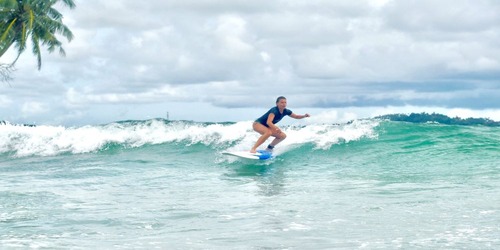
Sri Lanka is famous for its beaches. They wrap almost the whole island like a golden ribbon. The
southern and western coasts are especially loved for their soft sands and gentle waves. Places like
Mirissa, Bentota, and Unawatuna have that perfect tropical feeling, with tall coconut trees swaying
in the breeze and clear blue water that seems to go on forever. They’re great for swimming,
sunbathing, or just sitting back and listening to the ocean. Many people stay until evening to watch
the sunset, when the sky turns orange and pink, it’s honestly one of those views you never forget.
With the warm sunshine, friendly locals, and amazing seafood, the southern beaches really show why
Sri Lanka’s coast is known around the world. These aren’t just tourist spots; they feel alive,
peaceful, and deeply connected to nature.
On the eastern side of the island, the beaches are quieter and feel more untouched. It’s a slower
rhythm there. Arugam Bay is famous among surfers for its strong, rolling waves that draw people from
all over the world. A little farther north, the beaches in Trincomalee and Nilaveli have calm,
shallow waters, perfect if you love snorkeling or diving. The coral reefs are full of colorful fish
and tiny sea creatures, making the underwater world more vibrant. You can even take a boat out to
spot dolphins or whales during certain seasons. The eastern coast is a mix of adventure and calm,
and it shows a gentler, quieter side of Sri Lanka’s beauty.
Up north and along the western edge, the beaches each have their own mood. Negombo, not far from
Colombo, is lively and full of fishing boats, small markets, and beachside hotels. Mount Lavinia,
also near the capital, is another unique vibe, with soft golden sands and easy access from the city.
Farther north, Jaffna’s beaches feel different; quieter, less developed, but wonderfully real. Life
there moves at its own pace. Across the island, the beaches aren’t just for fun; they’re part of Sri
Lankan life itself. You’ll see fishermen at dawn, kids playing in the surf, and families gathering
by the shore. Altogether, Sri Lanka’s beaches blend adventure, culture, and peace. It’s a mix that
leaves a lasting impression on anyone who visits.
WILDLIFE
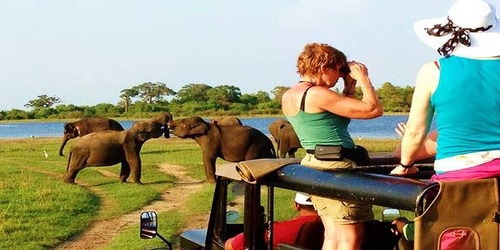
Even though Sri Lanka is a small island, it is incredibly rich in life. Every corner of the island
has wildlife attractions, which is why it’s considered one of Asia’s best places for wildlife. The
country has many national parks and reserves where animals still roam freely in their own habitats.
Elephants are probably the stars of the show as tourists love to see huge herds gathered in places
like Minneriya and Udawalawe. At Minneriya’s famous “gathering,” hundreds of elephants come down to
the water at once, which is honestly breathtaking to see. They’re not just impressive animals;
they’re deeply tied to Sri Lankan culture and traditions. Watching them move calmly through the wild
is something that tends to stay with you.
Leopards are another reason people travel here. Yala national park is known worldwide for having a
surprisingly high number of them, so your chances of spotting one are pretty good. Yala is also
alive with sloth bears, crocodiles, monkeys, and deer. If you’re more into birds, Sri Lanka has over
four hundred species, and many of them are brightly colored and endemic to Sri Lanka. In the
Sinharaja Forest Reserve, a UNESCO World Heritage Site, you walk through a rainforest that hums with
insects and rare plants while flashes of color creep in between the trees. Every park has its own
feel, so each visit shows a slightly different piece of the island’s wildlife.
The wildlife isn't only on land, either. The ocean around Sri Lanka is full of life, including
dolphins, sea turtles, and even blue whales, the biggest animals on earth. From Mirissa or
Trincomalee, you can take a boat out to see whales rising out of the sea, which is a view you will
never forget in life. Along the southern coast, sea turtles come up at night to lay eggs, and
conservation centers work hard to protect them. Together, the animals on land and in the water make
Sri Lanka feel truly alive, a place where nature still has room to breathe and where visitors can
feel part of it, even if only for a little while.
ARCHITECTURE
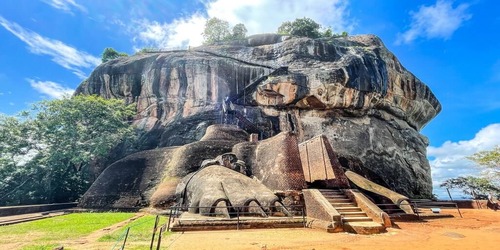
Sri Lanka's history goes back thousands of years, and its architecture still shows how skilled and
creative its ancient builders were. One of the most remarkable places is Sigiriya, or Lion Rock.
Rising almost 200 meters above ground, it was built in the 5th century by King Kashyapa as both a
fortress and a royal palace. Climbing to the top, you pass colorful frescoes, a shiny mirror wall,
and huge stone lion paws at the entrance. From the summit, the view of forests, lakes, and distant
villages is breathtaking. Sigiriya isn't just an engineering marvel; it's also a UNESCO World
Heritage Site that captures the attention of anyone interested in Sri Lanka's early civilization.
There are also other old cities like Anuradhapura and Polonnaruwa, which used to be powerful
capitals. They're full of temples, monasteries, and giant stupas that tell stories of faith and
artistry. In Anuradhapura, you can see the Ruwanwelisaya stupa and the sacred Jaya Sri Maha Bodhi,
said to be the world's oldest tree planted by human hands. Polonnaruwa, another World Heritage Site,
holds massive stone Buddha statues, elegant palaces, and man-made lakes that reveal how advanced Sri
Lankan engineers were centuries ago. Walking through these ruins gives a real sense of how rich and
sophisticated the island’s culture has always been.
Later, Sri Lanka's architecture took influences from abroad. The Portuguese, Dutch, and British each
left their mark through forts, churches, and government buildings that still stand today. Galle
Fort, first built by the Portuguese and then modified by the Dutch, remains one of Asia's
best-preserved colonial sites. Its narrow streets and sea-facing walls make you feel as if time has
slowed down. In modern cities like Colombo and Kandy, old colonial houses still stand beside modern
buildings. Together, Sigiriya, the ancient cities, and colonial buildings tell the story of Sri
Lanka's long history in a way that's both interesting and easy to see.
Contact
Elements
Text
This is bold and this is strong. This is italic and this is
emphasized.
This is superscript text and this is subscript text.
This is underlined and this is code: for (;;) { ... }. Finally, this
is a link.
Heading Level 2
Heading Level 3
Heading Level 4
Heading Level 5
Heading Level 6
Blockquote
Fringilla nisl. Donec accumsan interdum nisi, quis tincidunt felis sagittis eget tempus
euismod. Vestibulum ante ipsum primis in faucibus vestibulum. Blandit adipiscing eu felis
iaculis volutpat ac adipiscing accumsan faucibus. Vestibulum ante ipsum primis in faucibus lorem
ipsum dolor sit amet nullam adipiscing eu felis.
Preformatted
i = 0;

while (!deck.isInOrder()) {
    print 'Iteration ' + i;
    deck.shuffle();
    i++;
}

print 'It took ' + i + ' iterations to sort the deck.';
Lists
Unordered
- Dolor pulvinar etiam.
- Sagittis adipiscing.
- Felis enim feugiat.
Alternate
- Dolor pulvinar etiam.
- Sagittis adipiscing.
- Felis enim feugiat.
Ordered
- Dolor pulvinar etiam.
- Etiam vel felis viverra.
- Felis enim feugiat.
- Dolor pulvinar etiam.
- Etiam vel felis lorem.
- Felis enim et feugiat.
Icons
Actions
Table
Default
| Name |
Description |
Price |
| Item One |
Ante turpis integer aliquet porttitor. |
29.99 |
| Item Two |
Vis ac commodo adipiscing arcu aliquet. |
19.99 |
| Item Three |
Morbi faucibus arcu accumsan lorem. |
29.99 |
| Item Four |
Vitae integer tempus condimentum. |
19.99 |
| Item Five |
Ante turpis integer aliquet porttitor. |
29.99 |
|
100.00 |
Alternate
| Name |
Description |
Price |
| Item One |
Ante turpis integer aliquet porttitor. |
29.99 |
| Item Two |
Vis ac commodo adipiscing arcu aliquet. |
19.99 |
| Item Three |
Morbi faucibus arcu accumsan lorem. |
29.99 |
| Item Four |
Vitae integer tempus condimentum. |
19.99 |
| Item Five |
Ante turpis integer aliquet porttitor. |
29.99 |
|
100.00 |